
What Can a Contract Lawyer Do That You Can’t?
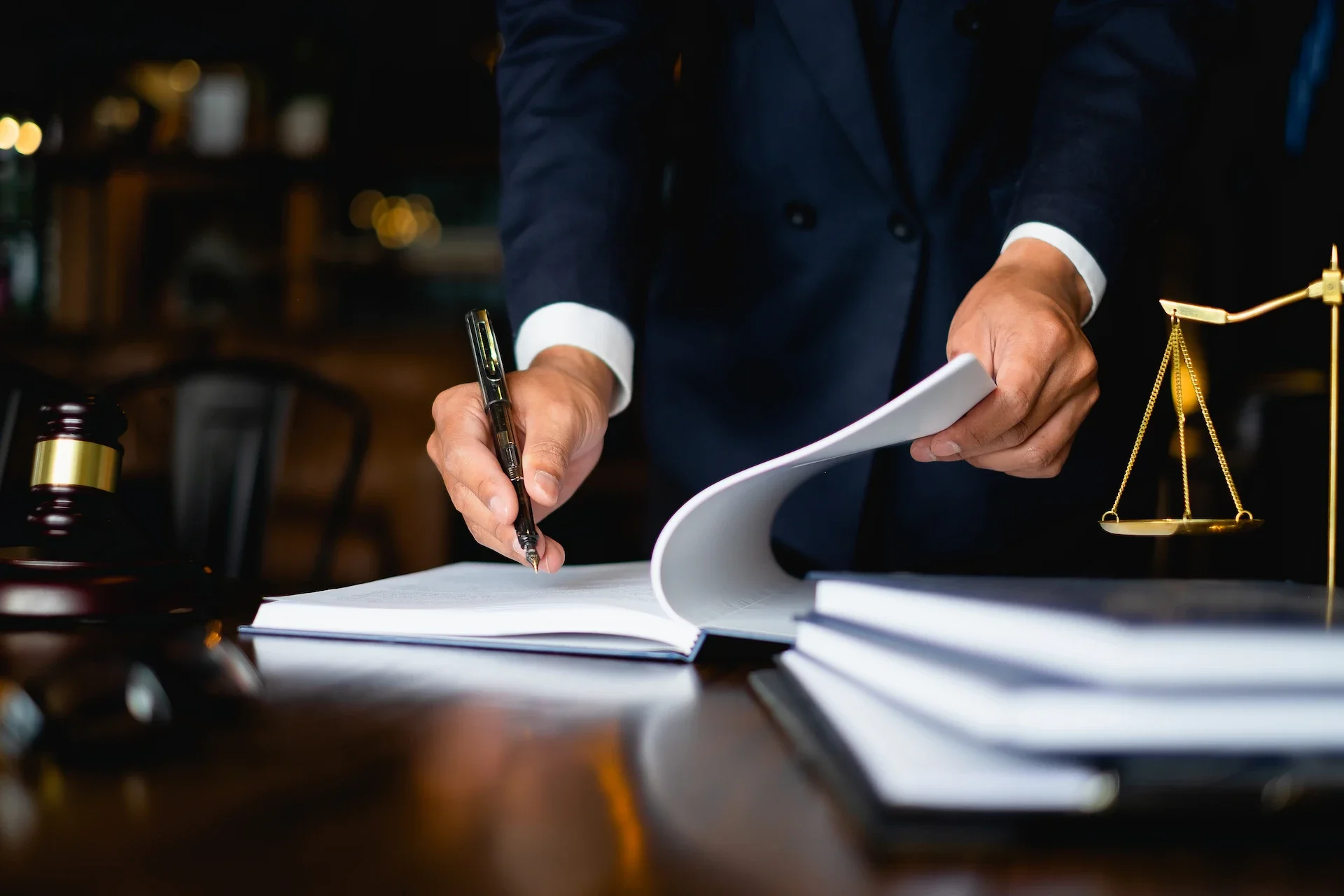
In the age of information, it is tempting to believe that everything can be DIY. You can watch a tutorial to fix a sink, use software to do your taxes, and download a template to seal a business deal.
But while a leaking sink is a nuisance, a leaking contract can be a catastrophe.
At ABW Law Firm, we often see clients after the damage has already occurred. They come to us when a partner has walked away with their client list, or when a vendor refuses to deliver goods they have already paid for. In many of these cases, the root of the problem is a contract that was signed without a professional legal contract review.
A contract is not just a piece of paper; it is the binding legal agreement containing the private law that governs your business relationships. Writing your own "law" without a license is a gamble few businesses can afford to lose. Here is what a professional contract lawyer sees—and fixes—that you might miss.
The "Hidden" Language of Law: Why Precision Matters
To the untrained eye, legal contracts often look like dense walls of text filled with unnecessary jargon. It is easy to assume that lawyers use "legalese" to justify their fees.
The reality is that "legalese" is actually a language of extreme precision. In a courtroom, standard English is often too ambiguous.
The Cost of Ambiguity
Consider the phrase: "The Vendor will use reasonable efforts to deliver the product by Friday."
To a business owner, that sounds fair. To a business contract attorney, that sentence is a lawsuit waiting to happen.
What does "reasonable" mean? Does it mean hiring extra staff if a machine breaks? Does it mean paying for expedited shipping?
If the delivery arrives on Saturday, does that constitute a material breach, allowing you to cancel payment?
A lawyer replaces "reasonable efforts" with specific benchmarks, defining exactly what constitutes delivery, what constitutes a delay, and the penalties associated with each. We eliminate the "gray area" where expensive disputes often occur.
The Template Trap: Why "One Size" Fits None
We understand the allure of the $50 online template. It looks official, it has the right headings, and it saves time. However, generic templates suffer from a critical flaw: they lack knowledge of your business and Nevada law.
Jurisdiction Matters
Contract law varies significantly by state. A non-compete agreement that is perfectly legal in Texas may be completely unenforceable in Nevada due to the state's specific restrictions on time and geography. If you use a template downloaded from a national database, you might be relying on a clause that a Nevada judge will throw out immediately.
The "Boilerplate" Myth
Most people skip the "Miscellaneous" section at the end of a contract—the clauses regarding "Force Majeure," "Severability," or "Governing Law."
A skilled attorney knows that these boilerplate clauses often determine the outcome of a dispute.
Force Majeure: Did your template account for supply chain disruptions caused by a pandemic? If appropriate, it should!
Venue: If you are a Las Vegas business, but your template states that disputes will be arbitrated in Delaware (because that’s where the template creator is based), you have just signed up for expensive travel costs to defend your rights.
Risk Mitigation: The Clauses You Need to Fight For
When we provide contract law services, we aren't just reading for typos. We are stress-testing the agreement against the most extreme scenarios. There are two specific clauses where an attorney earns their keep:
1. Indemnification (Who Pays for Mistakes?)
This is often the most fiercely negotiated section of any commercial agreement. If your vendor’s product injures a third party, or if your consultant infringes on someone else’s copyright, who gets sued?
Without a solid indemnification clause, you risk liability for damages caused by others. We make sure responsibility is placed appropriately.
2. Limitation of Liability (Capping the Damage)
Imagine a scenario where a $10,000 contract goes wrong, and the other party sues you for $2 million in "lost potential profits."
A contract lawyer ensures that, where appropriate, there is a Limitation of Liability cap. This clause states that, regardless of any issues that may arise, the most you can be held liable for is the amount specified in the contract (or a set insurance limit). This single paragraph can save your entire company from bankruptcy.
Dispute Prevention: The Ultimate Goal
The best contract is one that never ends up in a courtroom.
When a dispute arises, the first thing both parties do is check the contract. If the terms are vague, both sides will feel they are "right," and litigation becomes inevitable.
If the contract is drafted with ABW’s level of precision, the answer is clear. The contract acts as a roadmap to resolve the issue. It will dictate:
Exactly how to calculate damages.
Whether you must try mediation before suing.
Who pays the attorney fees for the dispute?
By making the outcome of a legal battle predictable (and expensive for the rule-breaker), a strong contract discourages the other side from fighting you in the first place.
The ABW Review Process
When you hire ABW Law Firm, you aren't just getting a proofreader; you are getting a strategic partner.
Goal Alignment: We start by asking, "What are you trying to achieve, and what are you afraid of losing?"
Redlining: We review the other party’s draft line by line, crossing out hazardous terms and inserting protections.
The "Bad Guy" Buffer: Negotiating a contract with a future business partner can be a delicate process. You want to maintain a friendly relationship. Let us be the "bad guy." You can attribute the strict terms to your legal team, allowing you to maintain a personal rapport with the client while still obtaining the necessary protection.
Frequently Asked Questions
Q: Is a handshake deal legal in Nevada?
A: Technically, oral contracts can be valid in Nevada; however, they are often difficult to prove. Furthermore, under the "Statute of Frauds," certain contracts (like those for the sale of land or goods over $500) must be in writing to be enforceable. Relying on a handshake is a massive risk.
Q: Why can’t I just use a contract from a previous deal?
A: This is known as "cannibalizing" a contract. The problem is that your previous deal may have had different leverage, timelines, or risks. Using an old contract for a new purpose often leaves gaps in your defense because the new variables aren't addressed.
Q: How much does contract review cost vs. the cost of a breach?
A: Reviewing a contract incurs a flat or hourly fee, which is a tiny fraction of the cost of litigation. A breach of contract lawsuit can easily cost $75,000 to $200,000 in legal fees alone, not including the damages you might have to pay. A review is an insurance policy for your business's health.
Stop Guessing. Start Protecting.
Your business is built on agreements. Don't let a weak foundation threaten everything you have worked for. Whether you need a master service agreement drafted or a partner's proposal reviewed, you need eyes that know what to look for.
Contact ABW Law Firm today. Let’s ensure your contracts are as strong as your business.
